Ukraine’s Cybersecurity Strategy 3.0: A Course Toward Cyber Resilience, Digital Sovereignty, and Proactive Cyber Defense
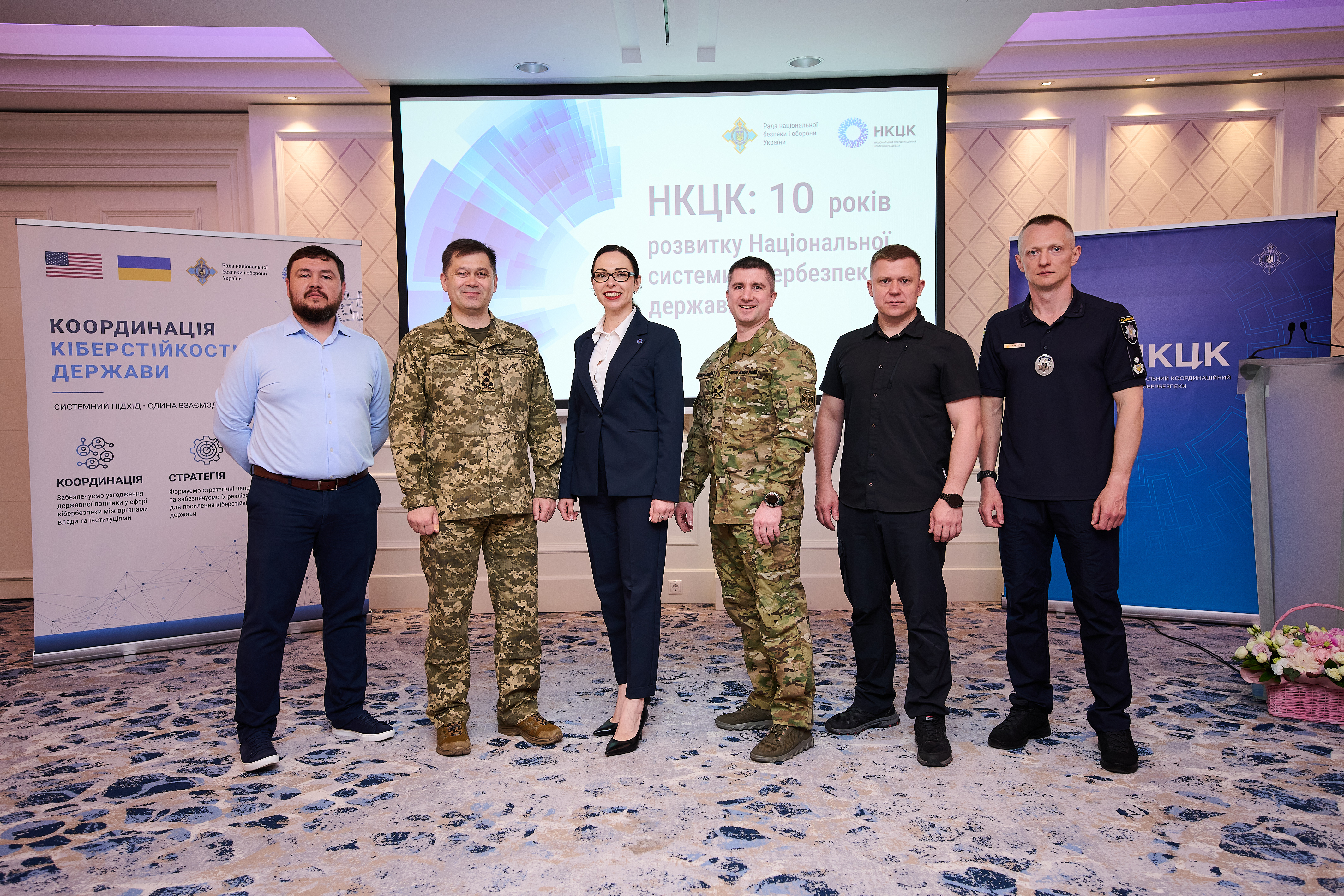 A strategic discussion titled “Ukraine’s Cybersecurity Strategy 3.0” was held in Kyiv, organized by the National Cybersecurity Coordination Center (NCCC) under the National Security and Defense Council of Ukraine (NSDC). The event brought together representatives of the security and defense sector, government institutions, international partners, the expert and academic communities, and Ukrainian cybersecurity companies to discuss the future development of Ukraine’s national cybersecurity system.
Opening the event, Nataliya Tkachuk, Head of the Information Security and Cyber Defense Department of the NSDC of Ukraine and Secretary of the NCCC,  emphasized the importance of updating strategic approaches to cybersecurity amid the ongoing full-scale war. She also noted the symbolism of holding the discussion during the 10th anniversary year of the National Cybersecurity Coordination Center.
“Cyberspace has become a full-fledged fifth domain of warfare. That is why updating our strategic priorities is critically important both for countering current threats and ensuring long-term resilience and superiority over the enemy,” said Nataliya Tkachuk.
 Oleksandr Potii, Head of the State Service of Special Communications and Information Protection of Ukraine (SSSCIP), focused on the results of implementing the current Cybersecurity Strategy and the need to transition to a new model of national cybersecurity.
“An analysis of the implementation of the current Cybersecurity Strategy showed that, as of the end of 2025, 86 percent of the planned measures had been completed. This demonstrates the resilience of our institutions, the effectiveness of the coordination mechanisms in place, and the state’s ability to adapt even under conditions of full-scale war,” Potii emphasized.
Volodymyr Karastelov, Acting Head of the Department for Counterintelligence Protection of State Interests in the Information 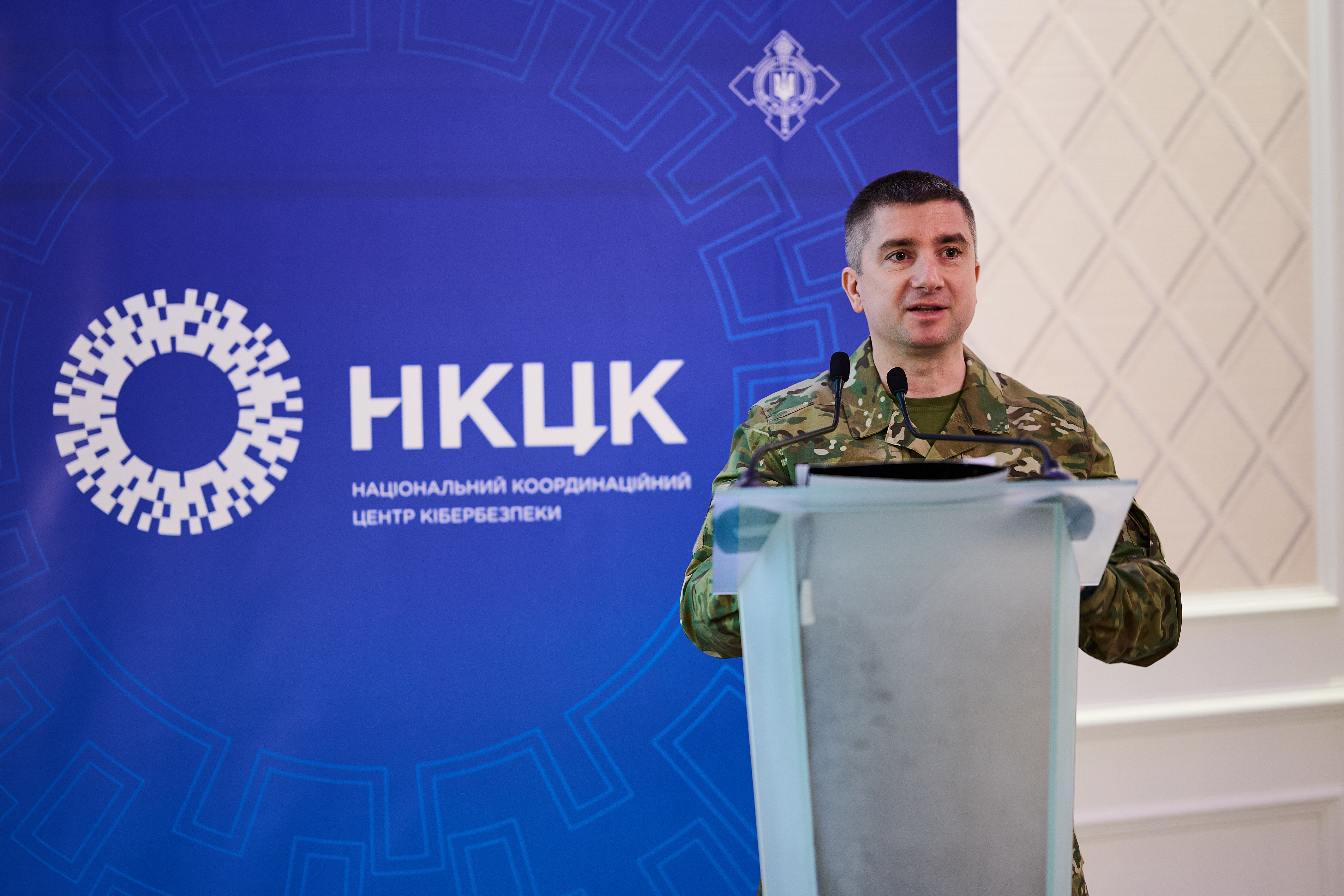 Security Sphere at the Security Service of Ukraine (SBU), highlighted the role of the NCCC in building an effective coordination system among national cybersecurity stakeholders and strengthening the country's resilience during wartime.
“The full-scale invasion has turned cyberspace into a true battlefield. Сoordination ceased to be a matter of luxury and became a matter of efficiency and state survival. That is why the NCCC’s role in facilitating cooperation among all cybersecurity stakeholders is critically important,” Karastelov noted.
 Vitalii Balashov, Deputy Minister of Digital Transformation for Cybersecurity and Cloud Technologies, stressed the importance of effective cooperation among all entities within Ukraine’s cybersecurity ecosystem as the country continues its digital transformation.
“Ukraine’s cybersecurity architecture is an example of a resilient system in which every institution fulfills its role, while the NCCC provides a platform for coordination, joint decision-making, and effective cooperation,” Balashov said.
 Yurii Vykhodets, Head of the Cyber Police Department of the National Police of Ukraine, emphasized the importance of interagency cooperation, professional capacity-building, and continuous improvement of cyber threat response mechanisms.
“Our daily cooperation with the NCCC serves as a systemic tool that allows us to transform challenges into successful examples of state protection. Through coordination and the rapid exchange of information, Ukraine effectively counters unprecedented cyber threats during wartime,” Vykhodets stated.
 Oleh Shemetov, Deputy Director and Head of the Information and Cybersecurity Policy Expert Group within the Ministry of Defense’s Directorate for Digital Transformation in the Defense Sector, highlighted the importance of strengthening cyber defense capabilities and addressing the needs of the security and defense sector in the new Strategy.
“The NCCC has created not only an effective coordination mechanism but also a professional community that works together to protect the state, represent Ukraine internationally, and shape the future of the national cybersecurity system,” Shemetov said.
The central event of the discussion was the presentation of the draft Cybersecurity Strategy of Ukraine 3.0, delivered by Nataliya Tkachuk.
During the presentation, she emphasized that the new strategic document reflects Ukraine’s experience in countering Russian cyber aggression and conducting cyber defense during the full-scale war, while also addressing emerging challenges related to rapid technological development.
“For us, proactive cyber defense, digital sovereignty, public-private partnerships, innovation, critical infrastructure protection, military systems security, future cyber talent, and strengthened international cooperation are key priorities. These principles form the foundation of the draft Cybersecurity Strategy of Ukraine 3.0,” Tkachuk emphasized.
According to her, the draft Strategy builds on the results of the current Cybersecurity Strategy, which achieved an implementation rate of 86 percent, while incorporating lessons learned from Russia’s cyber aggression against Ukraine, advances in artificial intelligence and quantum technologies, increasing global digital dependence, and the need to strengthen cybersecurity workforce development.
The Strategy defines seven key strategic objectives:
- Developing proactive cyber defense capabilities and countering cyber aggression;
- Strengthening the cyber resilience of society and critical infrastructure;
- Improving cyber incident response systems and threat intelligence sharing;
- Ensuring digital sovereignty and expanding public-private cooperation;
- Countering threats to national security and combating cybercrime;
- Enhancing international cooperation and regional leadership;
- Developing human capital, education, and innovation.
The document places particular emphasis on supporting domestic cybersecurity solution providers, developing a cyber reserve, establishing collective cyber defense mechanisms, improving cyber hygiene across society, and strengthening critical infrastructure protection. The draft Strategy includes commitments to transition away from IT products originating in countries that pursue policies unfriendly to Ukraine (either directly or through support for the aggressor state).
It is symbolic that the draft Strategy was presented during the 10th anniversary year of the National Cybersecurity Coordination Center — an institution that has become a key platform for coordinating national cybersecurity policy and one of the driving forces behind the development of Ukraine’s cybersecurity ecosystem.
 During the moderated discussion, participants reviewed the key provisions of the draft Cybersecurity Strategy of Ukraine 3.0 and discussed priorities for developing the national cybersecurity system amid continued Russian aggression and rapid technological change. Particular attention was given to proactive cyber defense, critical infrastructure resilience, cyber incident response and threat information sharing, digital sovereignty, public-private partnerships, international cooperation, and developing the next generation of cybersecurity professionals.
Following the discussion, participants submitted recommendations for refining the draft Strategy. These proposals will be further developed through consultations with government institutions, the expert and academic communities, and the private sector.
The implementation of the Cybersecurity Strategy of Ukraine 3.0 is expected to strengthen the country's cyber resilience, expand sovereign cybersecurity capabilities, reinforce digital sovereignty, and position Ukraine as one of the international leaders in cybersecurity.
The event was organized by the National Cybersecurity Coordination Center under the National Security and Defense Council of Ukraine with support provided by the U.S. Department of State through the U.S. Cybersecurity for Critical Infrastructure (CCI) in Ukraine Activity. CCI supports Ukraine's adoption of trusted U.S. and allied technologies, strengthens supply-chain security across critical infrastructure systems, and advances cybersecurity standards aligned with U.S. NIST frameworks - reinforcing American security, economic, and strategic interests while building Ukraine's long-term self-reliance. Over the past six years, the CCI Activity has supported the development of Ukraine’s national cybersecurity system, including strengthening the capabilities of the NCCC, promoting the adoption of trusted technologies, enhancing cybersecurity workforce development, and supporting the development of the CyberTracker/CyberHub Platform for Monitoring the Implementation of Ukraine’s Cybersecurity Strategy.